
What to Include in a Catalog Printing Quote Request for Faster, More Accurate Estimates
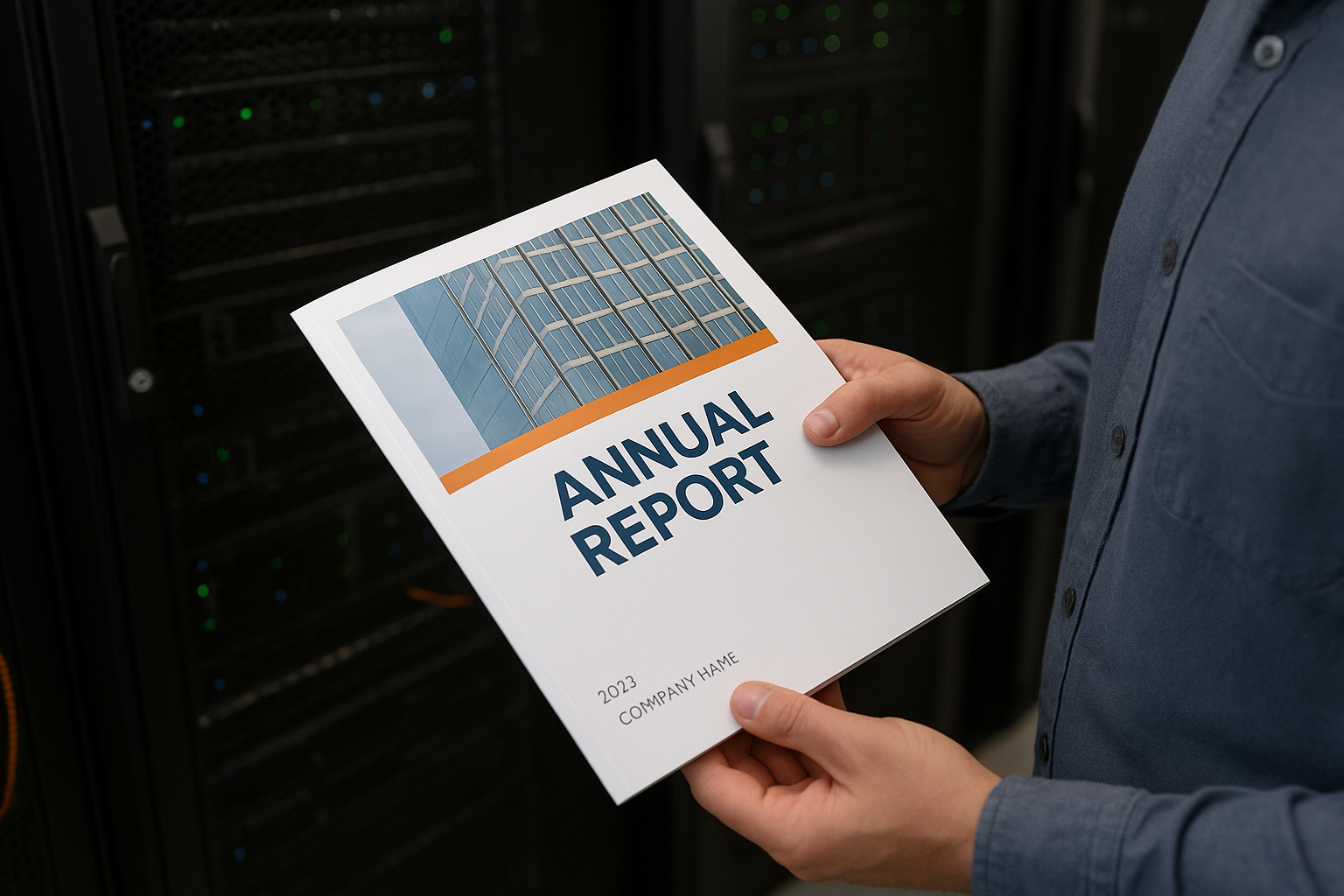
An annual report does more than summarize the past year. It reflects how your organization thinks, communicates, and presents itself to the people who matter most. For corporations, that may include investors, board members, customers, and employees. For nonprofits, it often means donors, grantmakers, partners, volunteers, and community stakeholders. In either case, a printed annual report can turn a routine requirement into a credible, persuasive communication tool.
That is why annual report printing deserves more attention than a last-minute print order. The format, paper, binding, finish, color quality, and delivery plan all influence how your message is received. A strong report feels intentional. It supports the brand, organizes complex information clearly, and gives readers a reason to keep turning pages.
This guide explains the practical decisions behind successful annual report design and printing, with a focus on what corporations and nonprofits should consider before sending files to press.
Why printed annual reports still matter
Digital reports are valuable for sharing information quickly, linking to additional resources, and broadening access. But print offers a different kind of impact. A printed report feels permanent. It can be handed out in meetings, included in donor packets, placed in welcome kits, mailed to stakeholders, or displayed in reception areas and event spaces.
For many organizations, print also helps communicate seriousness and professionalism. A well-produced report signals that the organization values quality, transparency, and presentation. That matters in corporate printing projects where brand consistency and investor confidence are priorities. It also matters in nonprofit printing, where trust, stewardship, and emotional connection are central to donor communication.
Printed reports can also support practical goals:
- Give executives and development teams a polished leave-behind
- Create a tangible piece for board meetings and annual events
- Support fundraising conversations with major donors and sponsors
- Equip sales or partnership teams with a credible overview of the organization
- Reinforce brand standards across departments and locations
Start with the report’s purpose, not just its page count
Before making production decisions, define what the report needs to accomplish. Too often, teams begin by discussing size, budget, or deadlines before they clarify audience and use. That can lead to a finished piece that looks good but does not fully support its purpose.
Ask a few practical questions early:
- Who is the primary audience?
- Will the report be mailed, handed out, displayed, or inserted into packets?
- Is the goal to inform, attract support, reinforce credibility, or all three?
- How long do you want readers to keep it?
- Should the report feel formal, premium, approachable, or highly visual?
A publicly traded company may need a highly structured report with a clean, restrained design and precise production standards. A nonprofit annual report may lean more heavily on storytelling, program photography, donor recognition, and mission-driven messaging. Both require quality annual report printing, but the best production choices can be different.
Plan annual report design and printing together
One of the most common mistakes is treating design and production as separate steps. In reality, the best annual report design and printing outcomes happen when print requirements are considered while the report is still being designed.
For example, page count affects binding. Binding affects spine width. Spine width affects cover design. Paper thickness affects mailing weight. Image placement affects how content crosses a fold or spread. Ink coverage affects color consistency and drying considerations. When these details are addressed early, the finished report is smoother to produce and more professional in hand.
Coordination matters especially for organizations managing multiple stakeholders. Marketing teams, finance leaders, board committees, development staff, and outside designers may all contribute to the report. A knowledgeable commercial printer can help align those moving parts by flagging specifications before they become expensive production issues.
Choose the right format for the audience and content
The physical format of an annual report influences readability, cost, and overall impression. There is no single correct size, but the format should fit the content and how the piece will be used.
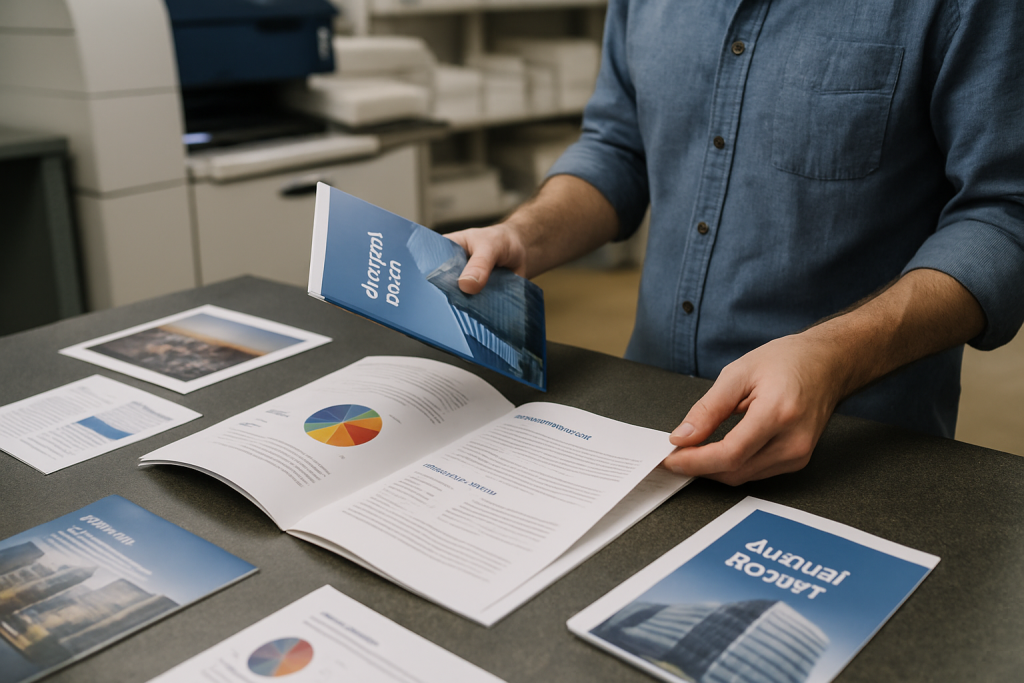
Common annual report format options
- Standard portrait booklet: A familiar, versatile option that works well for financials, leadership letters, charts, and stories.
- Square format: Often used for more visual reports where photography and branding play a major role.
- Oversized format: Useful when the report needs strong visual presence, though it may be less convenient for mailing or storage.
- Slim or digest size: A good fit for concise summary reports, donor impact pieces, or executive overviews.
If the report will be part of a broader communications package, think about how it fits with envelopes, folders, inserts, or event materials. A practical format often performs better than a visually ambitious one that creates mailing or handling problems.
Digital vs. offset printing for annual reports
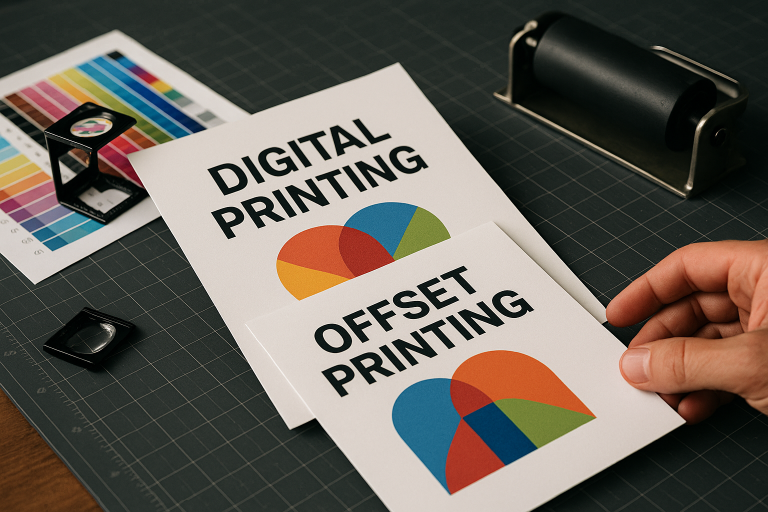
Organizations often ask which production method is better for annual reports. The answer depends on quantity, schedule, customization needs, and the visual requirements of the project. Both digital and offset can be effective forms of commercial printing services when matched to the right job.
| Printing Method | Best For | Advantages | Considerations |
|---|---|---|---|
| Digital printing | Shorter runs, versioning, quick updates, personalized distribution | Flexible quantities, efficient setup, supports variable content | Unit cost may be higher at larger volumes |
| Offset printing | Larger runs, highly color-sensitive projects, premium presentation | Excellent consistency, strong image reproduction, efficient for volume | Requires more setup and is less flexible for frequent small changes |
Digital printing can be a smart choice when you need smaller quantities for board members, regional offices, or donor segments, especially if versions differ by audience. Offset printing often makes sense for larger runs where color consistency and production efficiency are key. If your report includes companion pieces such as inserts, reply cards, or envelopes, discussing the entire package with your printer can help determine the best production path.
Paper selection shapes perception
Paper is one of the first things readers notice, even if they do not consciously identify it. Weight, finish, brightness, and texture all influence how the report feels and how the printing appears.
Questions to consider when choosing paper
- How premium should the report feel? Heavier cover stocks and quality text papers can elevate the presentation.
- Will the report contain many photos? Coated papers often support sharper image reproduction and richer color.
- Is readability the top priority? Uncoated or lightly coated text stocks can feel approachable and read comfortably.
- Will the report be mailed? Paper weight affects postage and handling.
- Does the piece need to align with sustainability goals? Discuss recycled content or other paper options if that matters to your organization.
For corporate printing, a matte or silk-coated stock can create a polished, executive feel without excessive glare. For nonprofit printing, the best paper may depend on the tone of the report. A community-centered report might benefit from a warm, tactile stock, while a donor-facing impact piece may call for a more refined finish with vivid photography.
Binding and finishing details matter
Binding is not just a functional decision. It contributes to usability and perceived quality. The right option depends on page count, budget, and how formal the report should feel.
Common binding choices
- Saddle stitching: Cost-effective and clean for lower page counts.
- Perfect binding: A more substantial, book-like option suited to thicker reports.
- Wire or coil binding: Useful when the report needs to lie flat, though less common for polished external presentation.
Finishing options can also influence the final impression. Aqueous coatings, UV coatings, soft-touch finishes, spot gloss, and foil accents may be appropriate in some cases, especially for covers. The best finishing choices support the brand rather than distract from the content. In annual reports, restraint often communicates confidence better than over-decoration.
Design for clarity, not just appearance
Strong design helps readers absorb information easily. A good annual report is visually appealing, but it is also structured. The most effective reports guide the reader through the content with clear hierarchy, consistent spacing, and purposeful use of charts, callouts, and imagery.
Key design principles for annual reports
- Make navigation easy: Use consistent headings, section dividers, page numbers, and table of contents where helpful.
- Keep charts readable: Financial and impact data should be clear in print size, color contrast, and labeling.
- Use photography intentionally: Images should reinforce the message, not simply fill space.
- Protect white space: Dense pages can make important information feel harder to trust or understand.
- Maintain brand consistency: Fonts, colors, and graphic elements should align with your broader identity system.
For nonprofits, one effective pattern is to balance metrics with human stories. For corporations, it is often useful to combine structured reporting with concise visual storytelling that reflects innovation, culture, and strategic direction. In both cases, design should support credibility.
Prepare print-ready files carefully
Even an excellent design can run into problems if the files are not properly prepared for production. Print-ready file preparation is one of the most important parts of any annual report printing project.
Typical file considerations include:
- Correct trim size and bleed settings
- Images at suitable resolution for print
- Fonts embedded or outlined as required
- Color built in the appropriate print mode
- Safe margins for text and critical graphics
- Accurate page order and blank-page planning where needed
- Clear separation of cover and text files if requested
It is also wise to proofread one final time after export. Minor issues such as missing logos, chart alignment shifts, incorrect page references, or transparency problems can affect the final result. When multiple departments review the report, assign one person to control version management so the printer receives a single approved file set.
Think beyond printing: mailing, kitting, and distribution
An annual report is not finished when it comes off the press. Distribution should be planned from the beginning, especially if reports need to reach different audiences in different ways.
Some organizations need bulk shipments to offices, branches, or event venues. Others need individual mailing to donors, shareholders, prospects, or board members. Some package the report with a letter, return envelope, promotional insert, or campaign materials. These details affect format, weight, quantity, addressing, and production timeline.
If your organization expects to mail reports, it can be useful to coordinate the project with direct mail printing and mailing preparation services. This is particularly relevant for nonprofits that pair annual reports with stewardship letters or fundraising follow-up. It is also helpful for corporations sending reports as part of investor communications or multi-location distribution.
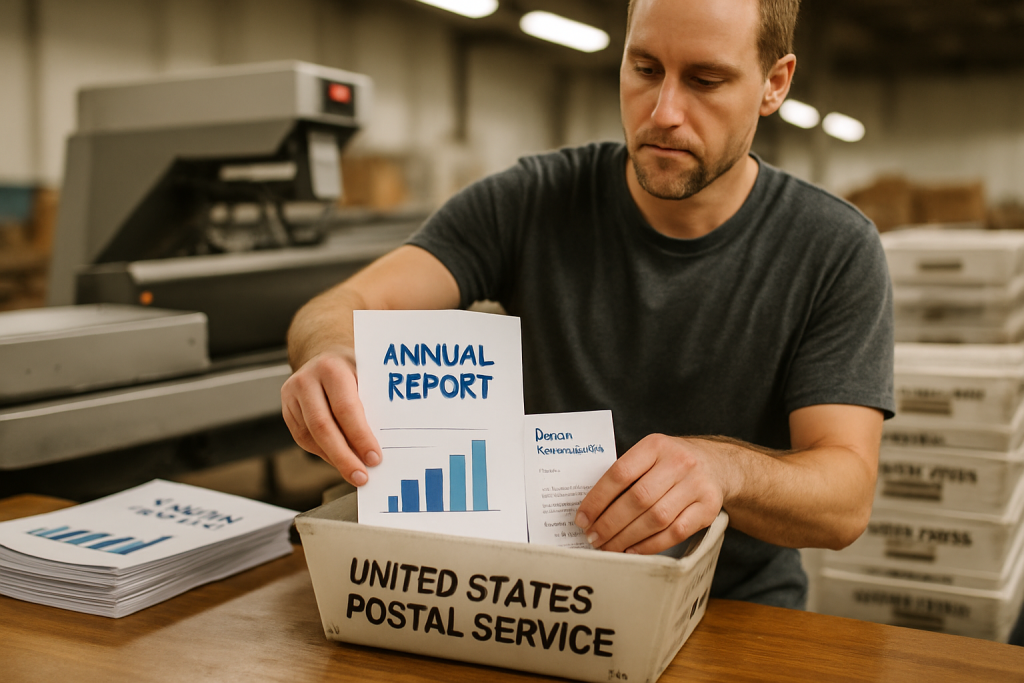
For recurring needs, printing fulfillment services can simplify storage, inventory control, and distribution across teams. That can reduce internal handling and help ensure the right quantities reach the right audiences without repeated rush orders.
Special considerations for nonprofit annual reports
Nonprofit printing often has a different communications challenge than corporate reporting. In addition to financial accountability, nonprofits need to show mission alignment, program impact, and stewardship of support. The printed report may need to reassure a long-time donor, inspire a first-time giver, or validate a grantmaker’s confidence.
A few practical priorities often matter most:
- Impact storytelling: Combine outcomes with recognizable examples, voices, or stories that make results feel real.
- Donor recognition: Present names accurately and in a format that is easy to review before printing.
- Mission consistency: Design and tone should reinforce the values behind the work.
- Fundraising integration: Consider whether the report should connect to later campaigns, events, or appeals.
Because nonprofit budgets and distribution strategies vary, some organizations benefit from producing a core printed report plus segmented companion pieces. That approach can make fundraising printing more efficient while preserving a strong flagship publication.
Special considerations for corporate annual reports
In corporate printing, annual reports often serve multiple audiences at once: leadership, investors, employees, customers, analysts, partners, and recruits. That creates pressure to communicate precision while still telling a compelling story about the organization.
Successful corporate reports typically emphasize:
- Brand discipline: The report should look and feel consistent with the company’s broader identity.
- Data presentation: Financials, milestones, and strategic priorities should be easy to interpret in print.
- Executive credibility: The leadership message should feel clear, thoughtful, and aligned with the report’s visual tone.
- Production consistency: Color, finishing, and binding should support a polished final presentation.
For larger organizations, annual report production can overlap with other pieces such as investor packets, executive presentations, internal newsletters, or even catalog printing-style product sections if the company wants to showcase offerings visually. Coordinating these related materials through one experienced print partner can improve consistency across touchpoints.
Build a realistic production schedule
Annual reports involve more approvals than many other print pieces. Writing, design, finance review, legal review, donor verification, executive sign-off, and print proofing can all affect timing. The best way to avoid last-minute compromises is to create a schedule that includes buffer time for revisions.
A practical schedule should account for:
- Content development and collection
- Photography and asset gathering
- Design rounds and internal review
- Prepress checks and proof approval
- Printing, finishing, and packaging
- Mailing, shipping, or fulfillment coordination
If your annual report is tied to an event, board meeting, campaign launch, or distribution deadline, say so early. Production decisions are easier when everyone understands the final delivery requirement.
Work with a printer that can guide the details
Annual reports are high-visibility pieces. They carry leadership messages, financial information, brand standards, and stakeholder expectations in one printed product. That makes them different from routine office printing.
A capable commercial printer should be able to help with more than press time alone. That includes advising on print methods, paper options, finishing choices, file setup, mailing preparation, and distribution logistics. For organizations balancing quality expectations with internal complexity, that guidance can be just as valuable as the final printed piece.
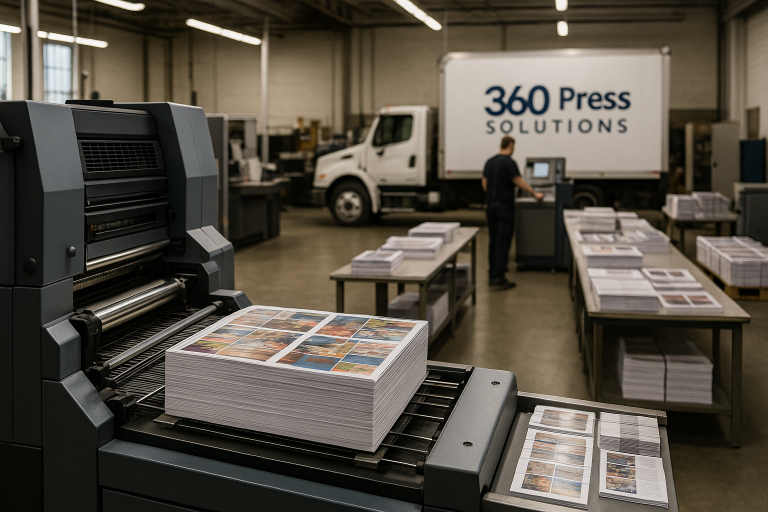
360 Press Solutions provides in-house production for commercial printing projects, including corporate publications, annual reports, direct mail, and fulfillment support. For organizations that want a dependable partner for polished, recurring print communications, that kind of production control can make complex projects easier to manage.
Conclusion
A successful annual report is not simply designed on screen and sent to print. It is planned as a physical communication tool with a specific audience, purpose, and distribution strategy. When format, paper, printing method, design structure, and delivery needs are considered together, the result is a report that looks professional, reads clearly, and supports the goals behind it.
Whether you are managing annual report printing for a corporation, coordinating nonprofit printing for donor stewardship, or comparing options for annual report design and printing, the strongest outcomes come from early planning and careful production decisions. A well-made report does more than document a year. It helps your organization present itself with clarity, credibility, and confidence.



Related posts


