
How to Manage Print Inventory Across Multiple Locations Without Running Out or Overordering
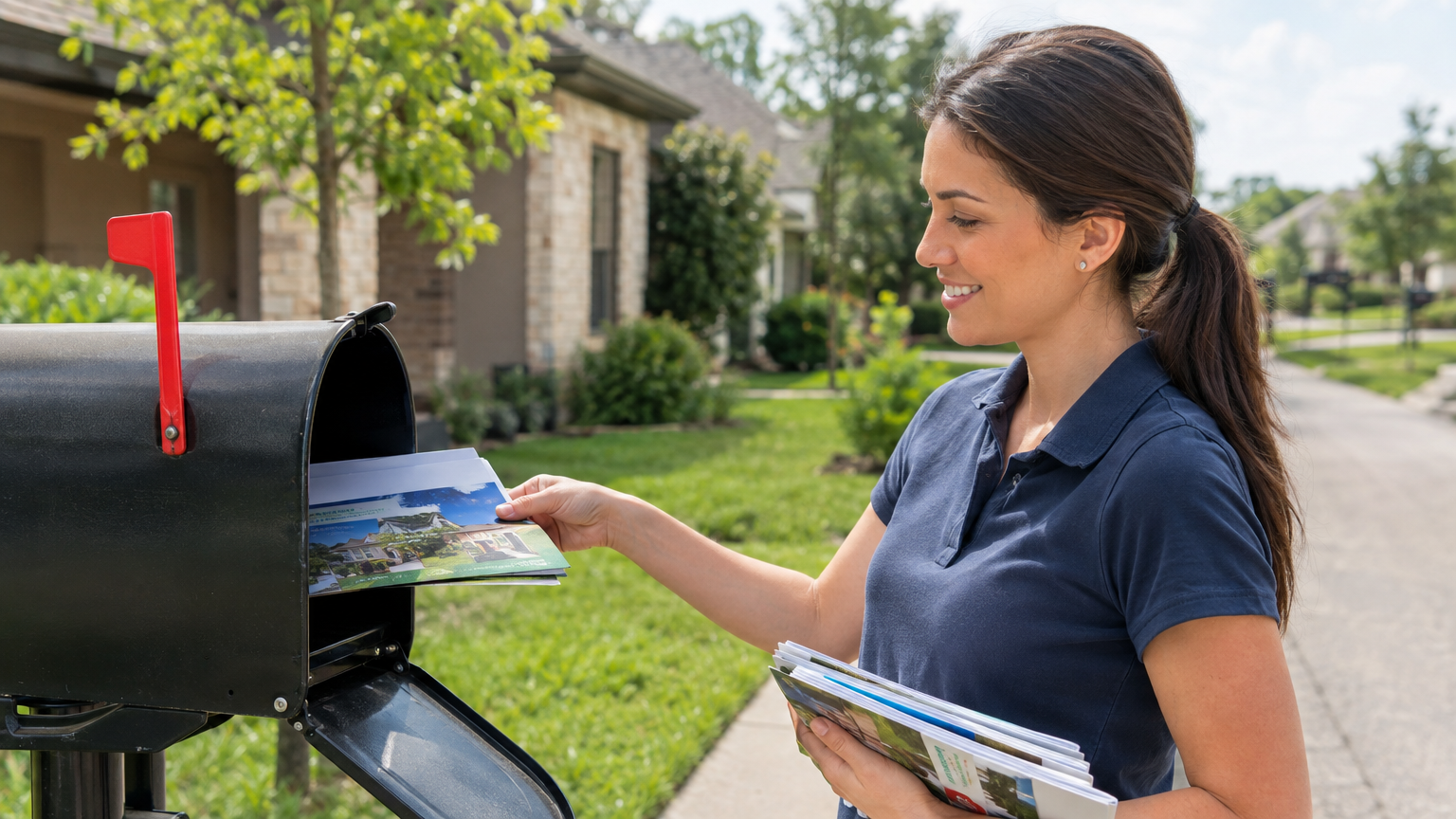
Direct mail still earns attention in a crowded marketing environment, but choosing the right delivery strategy can make the difference between a campaign that feels focused and one that feels wasteful. One of the most common questions marketing teams ask is whether to use Every Door Direct Mail or a more selective mailing list. Both approaches can support strong campaigns, but they work in very different ways.
If you are weighing EDDM vs targeted mailing lists, the right answer depends on what you are trying to accomplish. Are you trying to blanket a neighborhood with a local offer? Reach households in a specific income range? Promote a fundraising event to likely donors? Introduce a new business to an area? The best path often comes down to audience, budget, message, and how much precision your campaign needs.
This guide breaks down how each approach works, where each one shines, and what to consider before you invest in direct mail printing, design, and postage preparation.
What Is Every Door Direct Mail?
Every Door Direct Mail, often called EDDM, is a direct mail option that delivers a printed piece to every household on selected postal routes. Instead of mailing to a named list of recipients, you choose the routes you want to cover and send your piece to every address within those routes that qualifies for the program.
EDDM is often used for:
- Restaurant promotions
- Retail grand openings
- Service-area awareness campaigns
- Political outreach
- Community event promotion
- Local nonprofit visibility
The appeal is straightforward: broad neighborhood coverage without having to build or purchase a mailing list. If your ideal customer is defined more by geography than by individual data, EDDM can be a practical and efficient option.
When EDDM makes sense
EDDM is especially useful when your goal is saturation. For example, a home services company that wants visibility across a new territory may benefit from reaching every home in selected carrier routes. A childcare center, fitness studio, clinic, or local retailer may also use EDDM when nearby residents are the primary audience.
This strategy can also work well when the offer is broad. If your message applies to nearly everyone in an area, such as “now open,” “now enrolling,” “seasonal sale,” or “visit our new location,” EDDM keeps the campaign simple.
What Are Targeted Mailing Lists?
Targeted mailing lists focus on specific recipients rather than every address on a route. A list may be built from your own customer data, donor records, member files, event attendees, prospect databases, or third-party demographic selections. The goal is to mail only to people who fit particular criteria.
That targeting may include:
- Household income ranges
- Homeownership status
- Business type or industry
- Job title
- Age range
- Past purchase behavior
- Donor history
- Geographic boundaries
This approach is ideal when relevance matters more than broad reach. If your audience is narrower, your offer is more specialized, or your campaign relies on personalization, a targeted list is often the better fit.
When targeted mailing lists make sense
A targeted list can be powerful when your ideal recipient is clearly defined. A B2B company may want to reach operations managers, purchasing leaders, or executives in certain industries. A nonprofit may want to focus on past donors, lapsed donors, or households that match a likely giving profile. A healthcare or financial brand may need more precise segmentation. A school, university, or cultural organization may want to tailor messaging by household type or prior engagement.
Targeted lists also work well when variable data printing is part of the plan. If your postcard, letter, self-mailer, or fundraising appeal includes personalized names, locations, offers, or messages, list quality becomes even more important.
EDDM vs Targeted Mailing Lists at a Glance
| Factor | Every Door Direct Mail | Targeted Mailing Lists |
|---|---|---|
| Audience selection | All eligible addresses on selected postal routes | Specific recipients based on chosen criteria |
| Best for | Broad neighborhood awareness | Precision outreach and segmented campaigns |
| Personalization | Limited | Strong potential with variable data printing |
| List requirement | No named mailing list required | Requires list sourcing and mailing list processing |
| Geographic focus | Very strong | Can be local, regional, or national |
| Waste potential | Higher if many recipients are outside your buyer profile | Lower if the list is well selected and maintained |
| Campaign complexity | Simpler planning and mail prep | More setup, data review, and segmentation |
| Common formats | Postcards, oversized mailers, promotional pieces | Letters, postcards, catalogs, newsletters, fundraising packages |
The Biggest Difference: Reach Versus Precision
The heart of the EDDM vs targeted mailing lists decision is reach versus precision.
EDDM prioritizes coverage. It helps you dominate a selected area with a simple, consistent message. That broad exposure can be valuable when local awareness is the main objective.
Targeted mailing lists prioritize relevance. They allow you to spend your mailing budget on the people most likely to care about what you are offering. That can be especially useful when your print and postage budget needs to work harder per piece.
Neither approach is universally better. A neighborhood pizza restaurant and a regional B2B software provider should not use the same direct mail strategy. The right choice depends on how tightly defined your audience is and what action you want recipients to take.
How Budget Should Influence the Decision
Budget matters, but not just in the obvious way.
Many marketers assume EDDM is always the lower-cost choice because it simplifies distribution and avoids list acquisition. In some campaigns, that is true. But lower complexity does not always mean lower total waste. If a large share of the recipients are unlikely to buy, donate, attend, or respond, you may save on list work but spend more on unnecessary printing and postage.
On the other hand, targeted campaigns usually involve more planning. There may be costs tied to list sourcing, list hygiene, segmentation, and mailing list processing. However, a more precise audience can help you avoid sending expensive pieces to poorly matched recipients.
When comparing options, think beyond the mailing method itself. Consider the full campaign cost:
- Creative development
- Direct mail printing
- Paper choice and format
- Data preparation
- Personalization
- Addressing and sorting
- Mail preparation
- Postage
- Fulfillment and distribution logistics
A simple postcard mailed broadly may be a smart use of budget for local awareness. A personalized letter package mailed to a smaller, high-value audience may be the better investment for donor outreach or business development.
Think About the Offer Before You Choose the Strategy
Your message should influence your distribution model.
If the offer is universal, broad geographic mailing often makes sense. Examples include:
- A new store opening
- A local seasonal special
- A restaurant menu mailer
- A neighborhood landscaping promotion
- An event open to the whole community
If the offer is niche, a targeted list usually makes more sense. Examples include:
- A premium service for higher-income households
- A B2B offer for companies in a certain industry
- A donor renewal campaign
- A catalog aimed at previous buyers
- A specialized healthcare or education program
The more specific the message, the more important targeting becomes. A generic message can tolerate broader mailing. A highly tailored message usually cannot.
Creative Strategy Changes With the Mailing Method
The best design and copy approach for EDDM is often different from the best approach for a targeted list campaign.
Creative approach for EDDM
Because EDDM reaches a broad audience, the creative usually needs to communicate quickly. Strong offers, bold headlines, simple calls to action, and easy-to-scan layouts are especially important. You typically have only a moment to catch attention and motivate interest.
Formats such as oversized postcards or visually striking self-mailers often work well because they create instant visibility in the mailbox.
Creative approach for targeted lists
Targeted lists allow for more nuance. You may segment by audience type, personalize headlines, vary imagery, or change the offer for different recipient groups. A fundraising organization might adjust copy for recurring donors versus first-time prospects. A corporate campaign might tailor messaging by industry or job function.
This is where variable data printing becomes especially valuable. Personalized direct mail can feel more relevant and intentional when the underlying data is accurate and well managed.
The Role of Mailing List Processing
Mailing list processing is one of the less visible but more important parts of a successful targeted direct mail campaign. A list is not just a spreadsheet of addresses. It often needs to be cleaned, standardized, deduplicated, sorted, and prepared for postal requirements.
Proper list processing may include:
- Address standardization
- Duplicate removal
- Move updates when applicable
- Suppression of unwanted records
- Segmentation by audience criteria
- Postal presort preparation
This work protects both budget and brand image. Misspelled names, duplicate mailings, and undeliverable addresses can make even a well-designed campaign look careless. Clean data supports better delivery, more professional presentation, and more efficient production.
For organizations managing recurring campaigns, list maintenance becomes even more important over time. Customer and donor data changes constantly. Keeping those records organized helps future campaigns launch faster and run more smoothly.
When EDDM Is the Better Choice
EDDM is often the stronger option when:
- Your audience is primarily defined by location
- You want to build awareness quickly in a neighborhood or service area
- Your offer has mass appeal
- You do not need personalization
- You want a relatively straightforward campaign setup
Consider a few examples. A local roofing company after a major storm may want to reach every nearby household. A new retailer may want to introduce itself to all residents in surrounding routes. A nonprofit may want broad visibility for a community drive or open event. In each case, coverage matters more than fine-grained audience selection.
EDDM can also support repeated presence. Mailing the same routes consistently can help reinforce recognition and familiarity, especially for businesses that depend on being top of mind when a need arises.
When Targeted Mailing Lists Are the Better Choice
Targeted mailing lists are often the stronger choice when:
- Your audience is clearly defined
- Your message varies by segment
- You want to personalize the mail piece
- Your product or service is not relevant to every household
- You are mailing more expensive formats such as catalogs, multi-piece packages, or highly finished pieces

Examples include a company promoting high-value B2B services, a school recruiting specific family demographics, or a nonprofit sending a tailored fundraising appeal. In these situations, a narrower list can help the campaign stay relevant and cost-conscious.
Targeted lists also matter when brand perception is a priority. If the message is sophisticated, premium, or highly customized, delivering it to the right audience supports a more intentional impression.
Can You Combine Both Strategies?
Yes, and in many cases, that is the smartest answer.
Some organizations use EDDM for broad market visibility and targeted lists for higher-value follow-up. For example, a business might use EDDM to introduce a new location to surrounding neighborhoods, then run a more targeted campaign to previous customers or qualified prospects with a stronger offer. A nonprofit might use saturation mail to promote an event while sending personalized appeals to known donors separately.
This layered approach can help you balance visibility and precision. It also allows different printed formats to do different jobs. A broad postcard may create awareness, while a personalized letter or brochure package provides more detail to a selected audience.
When campaigns become more complex, it helps to work with a print partner that can coordinate production, data handling, addressing, sorting, and distribution preparation under one roof.
Printing Considerations That Affect Results
The mailing strategy is only part of the equation. Print quality, format, and execution matter too.
Whether you choose EDDM or a targeted list, think carefully about:
- Piece size and postal compatibility
- Paper stock and finish
- Color quality and image clarity
- Readability of offers and calls to action
- Brand consistency across locations or campaigns
- Durability during mail handling
Professional direct mail printing supports both credibility and response. If the piece feels flimsy, cluttered, or inconsistent with your brand, the mailing method will not save it. Strong print production helps your message look established, trustworthy, and worth the recipient’s attention.
For recurring campaigns, consistency matters just as much as creativity. Marketing teams, nonprofits, and multi-location organizations often benefit from systems that keep materials, versions, and mailing details organized from one drop to the next.
Questions to Ask Before You Decide
Before selecting EDDM or a targeted list, it helps to answer a few practical questions:
- Is my audience best defined by geography or by data?
- Does my offer apply to nearly everyone in the area or only a subset?
- Do I need personalization?
- Am I trying to maximize visibility or minimize waste?
- Will this be a one-time mailing or an ongoing campaign?
- Is my internal data clean and current?
- What print format best supports the message?
These questions often clarify the strategy quickly. If your answers point toward broad exposure, EDDM may be the right fit. If they point toward relevance, segmentation, and personalization, targeted mailing lists likely deserve stronger consideration.
Choosing the Strategy That Fits the Campaign
There is no one-size-fits-all winner in the EDDM vs targeted mailing lists conversation. Every Door Direct Mail is an efficient tool for broad geographic coverage and local visibility. Targeted mailing lists offer greater control, better personalization opportunities, and more relevance when the audience is specific.
The smartest choice is the one that matches your real campaign goal. If you need neighborhood saturation, EDDM can be a practical path. If you need precision and message alignment, targeted lists usually deliver a better strategic fit. And for many organizations, the strongest direct mail plan blends both approaches across different stages of outreach.
As you plan your next campaign, think beyond postage alone. Consider the full picture: audience, message, design, data quality, printing method, and mail preparation. When those elements work together, direct mail becomes more than a distribution channel. It becomes a tangible brand experience that puts your message directly into the hands of the people you most want to reach.
[don_ai_article_cta]
Related posts


