
What to Include in a Catalog Printing Quote Request for Faster, More Accurate Estimates

Direct mail often looks simple from the outside: create a postcard or letter, print it, and send it. In reality, the campaigns that arrive on time usually succeed because someone planned every step early, coordinated multiple moving parts, and built enough margin for revisions, data cleanup, production, and mailing preparation.
That matters because a delayed campaign can miss a seasonal promotion, push a fundraising appeal past a key giving window, or leave sales teams waiting on materials tied to a launch. Good direct mail campaign planning is not just about logistics. It protects timing, budget, brand consistency, and the usefulness of the piece once it reaches the mailbox.
If you want a campaign that actually gets out the door on schedule, you need more than a design concept. You need a realistic plan for audience selection, format, data, printing method, personalization, approvals, postage, and fulfillment. This guide walks through the process and shows where delays usually happen so your team can avoid them.
Start with the mailing date, then work backward
One of the most common mistakes in direct mail campaign planning is treating the in-home date as if it only depends on printing. It does not. The timeline begins much earlier, and several tasks happen before a press ever starts running.
Start by defining the date the mail should reach recipients or the window in which it needs to land. Then work backward through the major stages:
- Offer development and campaign goals
- Audience and mailing list selection
- Creative concept and copywriting
- Design and internal review
- Data cleanup and personalization setup
- Print production
- Addressing, sorting, and mailing preparation
- Entry into the mail stream and transit time
Working backward helps teams see the full schedule instead of only the visible printing deadline. It also makes approval delays easier to spot before they become expensive.
For example, a nonprofit appeal may require signoff from development, finance, leadership, and legal. A multi-location business may need versioning by region, salesperson, or product line. Those details affect schedule just as much as paper and ink.
Define the campaign goal before choosing the format
When teams are rushed, they sometimes jump straight to format: postcard, self-mailer, letter package, or brochure. A better approach is to clarify the campaign goal first. The piece should match what you are asking the recipient to do.
Common goals include:
- Generating leads for a sales team
- Driving traffic to a store, event, or landing page
- Promoting a limited-time offer
- Supporting donor outreach or fundraising printing campaigns
- Reactivating past customers
- Equipping field locations with coordinated outreach materials
Once the goal is clear, you can make smarter format decisions. A postcard may work well for a concise offer and quick visibility. A letter package may be better for a more personal ask, a higher-value service, or a donation appeal. A catalog or multi-page piece may be necessary if the recipient needs more information before responding.
Choosing the right format early also helps your print partner recommend the most suitable direct mail printing approach, finishing options, and mailing setup.
Build a realistic scope for creative, data, and approvals
Many mail delays happen because the team underestimates how much coordination the campaign needs. A single postcard with one offer and one list is very different from a segmented campaign with personalized offers, multiple versions, and custom landing pages.
To scope the project accurately, answer questions like these at the beginning:
- How many versions of the piece are required?
- Will the mailer be personalized by name, location, product, or donor history?
- Do different internal stakeholders need to approve copy, branding, pricing, or legal language?
- Are there multiple source lists to combine or suppress?
- Will the campaign include matching envelopes, inserts, reply cards, or kitting?
- Does inventory need to be warehoused or distributed across locations?

The more precise your scope is, the easier it becomes to plan production, estimate time accurately, and avoid last-minute surprises.
Choose the mailing list early and clean it thoroughly
A strong design cannot rescue a weak or disorganized list. In many campaigns, the list is the biggest source of delay because it arrives late, contains inconsistent formatting, or requires heavy cleanup before it can be used.
Whether you are mailing to house accounts, prospects, donors, or geographic routes, give list work enough time. That may include:
- Standardizing fields and formatting
- Removing duplicates
- Suppressing opt-outs or ineligible contacts
- Separating records by audience segment
- Verifying names, addresses, and variable fields
- Preparing the file for personalization and postal requirements
This is especially important when using bulk mailing services or Every Door Direct Mail, where mail setup and postal entry requirements affect timing and execution. If your list needs processing, sorting, or addressing support, involving your print and mail partner early can prevent errors from cascading into production.
Use variable data printing strategically
Variable data printing allows you to customize printed pieces using information from your mailing list. That can include names, locations, personalized offers, account managers, store addresses, donation amounts, or messaging tailored to specific segments.
Used well, personalization can make a campaign feel more relevant and more useful. But it also adds complexity, and complexity needs planning.
Before approving a variable campaign, confirm:
- Which data fields will change from piece to piece
- Whether the source data is complete and consistently formatted
- How many versions or rules the campaign includes
- Who will proof personalized samples before production
- What happens if a data field is missing or invalid
For example, a company mailing to multiple territories might personalize each mailer with the local sales representative and nearest showroom. A fundraising organization might segment donors by giving history and tailor the ask accordingly. Both can be effective, but both require careful proofing. One bad field mapping can hold up an entire run.
That is why variable data printing should be treated as part of the campaign strategy, not as a last-minute add-on.
Match the print method to the campaign
Not every direct mail job should be produced the same way. The right print method depends on quantity, turnaround expectations, personalization needs, budget considerations, and the complexity of the piece.
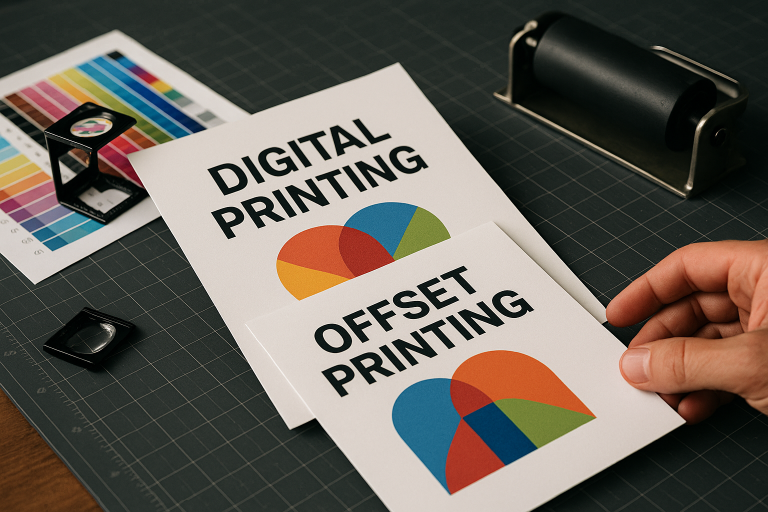
In general, digital printing is often a strong fit for shorter runs, faster versioning, and personalized mailings. Offset printing is often well suited to larger quantities and projects where consistent color reproduction across a substantial run matters. A commercial printing partner with both capabilities can help evaluate the tradeoffs based on your specific project.
| Consideration | Digital Printing | Offset Printing |
|---|---|---|
| Typical fit | Shorter runs, versioned campaigns, fast updates | Larger runs, consistent high-volume production |
| Personalization | Well suited to variable data printing | Possible in hybrid workflows, but less direct for highly personalized runs |
| Setup needs | Generally quicker setup | More extensive setup before production |
| Best use case | Targeted campaigns with multiple segments | Large-scale campaigns with stable creative |
The key is not choosing a method in isolation. It is choosing one that supports the campaign timeline and mailing strategy.
Design for production and mailing, not just appearance
Attractive design matters, but mail pieces also need to function well in print and through the mailing process. A design that ignores postal considerations, addressing space, folding, or barcode placement can create delays late in the schedule.
When preparing the creative, make sure the team addresses:
- Final trim size and folded size
- Bleeds, safe zones, and image resolution
- Placement for addresses and indicia if required
- Space for barcodes or postal markings
- Paper stock suited to the format and message
- Whether envelopes, inserts, tabs, or sealing methods are needed
Paper choice also affects timing and presentation. A premium stock may reinforce a professional brand image for corporate printing or donor communications. A lighter, efficient stock may be appropriate for high-volume outreach. The right selection supports both the look of the piece and the operational realities of production and mailing.
This is one reason many organizations benefit from working with a commercial printing services provider that handles production in-house. When design, printing, finishing, and mailing preparation are coordinated, potential issues can be spotted earlier.
Create one owner for the timeline
Campaigns often stall when no single person owns the schedule. Marketing may be waiting on leadership. Purchasing may be waiting on final quantities. Design may be waiting on list segmentation. Printing may be waiting on approved files.
Assign one project owner to track deadlines, approvals, and dependencies. That person does not need to do every task, but they do need authority to keep the project moving and escalate decisions when milestones slip.
A useful timeline owner will:
- Set internal deadlines earlier than the final production deadline
- Confirm who approves each stage
- Track when data files are due
- Coordinate proof reviews
- Verify mailing quantities and versions
- Communicate changes quickly to the print partner
Without a single owner, projects can look busy while making little actual progress.
Proof the campaign like a production job, not just a marketing concept
Proofing is where timing discipline really shows. Teams often review creative for tone and appearance but fail to review it for production accuracy. That is how small mistakes turn into reprints, mailing delays, or wasted postage.
Proofing should cover more than spelling and layout. Review the piece for:
- Correct offer dates and expiration dates
- Accurate URLs, phone numbers, and reply instructions
- Version-specific messaging by segment or location
- Personalization logic and sample records
- Envelope copy and insert order
- Postal and addressing elements
- Final quantities by version
If the campaign uses variable data printing, request representative proofs that show different scenarios, not just one sample. If it includes multiple components, review the full package as a recipient would receive it. This is especially important for nonprofit printing and fundraising printing, where the reply device, envelope, and ask amount may all need to align perfectly.
Plan for mailing preparation well before the print date
Mailing preparation is not a minor finishing step. It is a core part of execution. If the campaign requires addressing, sorting, tabbing, bundling, inserting, or postal documentation, those details should be planned early.
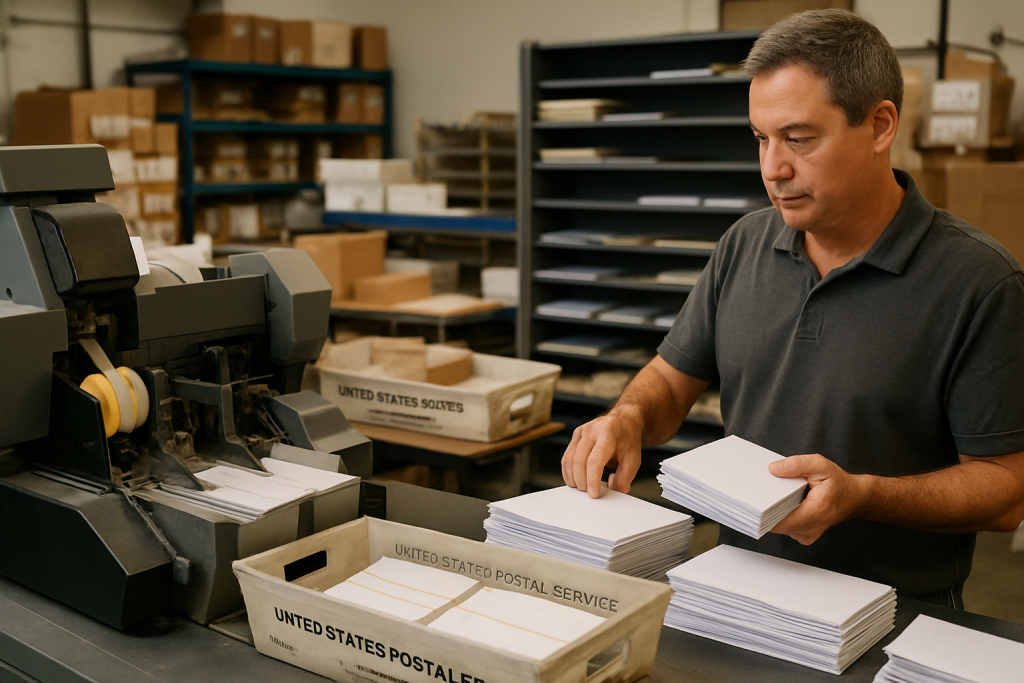
This is where experienced bulk mailing services can simplify the process. Instead of treating mailing as an afterthought, coordinate it as part of the original production plan. That includes:
- Confirming the mailing class and entry strategy
- Preparing lists in the required format
- Understanding addressing and barcode requirements
- Coordinating inserts, match mail, or multi-piece packages
- Allowing time for sorting and postal preparation
For recurring campaigns, it is also helpful to standardize specs whenever possible. Reusing proven formats, paper choices, and data structures can reduce setup friction and make future campaigns easier to launch on time.
Use a mailing preparation checklist for every campaign
Even experienced teams miss details when schedules are tight. A consistent mailing preparation checklist reduces preventable delays and keeps responsibilities clear.
Here is a practical framework you can adapt:
Strategy and scope
- Define the campaign goal and target audience
- Set the desired in-home date or response window
- Confirm format, size, and components
- Assign a project owner and approval team
Data and list readiness
- Finalize the mailing list source
- Clean, deduplicate, and segment records
- Verify personalization fields for variable data printing
- Confirm suppression lists and exclusions
Creative and files
- Approve final copy, design, and calls to action
- Check image quality, bleeds, and trim settings
- Reserve space for addressing and postal elements
- Confirm versioning rules and proof scenarios
Production planning
- Select the best print method for quantity and schedule
- Approve paper stock, finishing, and folding
- Confirm quantities for each version
- Schedule proof review and final signoff
Mailing and distribution
- Confirm addressing, sorting, and inserting requirements
- Review postal documentation and mailing setup
- Allow time for bulk mailing services and handoff
- Coordinate any warehousing, kitting, shipping, or fulfillment needs
A checklist is especially valuable for organizations with repeat mailings, multiple locations, or several internal approvers. It creates consistency from one campaign to the next.
Leave room for the delays you can predict
The goal is not to create a perfect schedule with no changes. The goal is to build a schedule that still works when ordinary complications appear. Those complications are common: a list arrives late, a stakeholder wants revised language, a promotion changes, or a personalized field needs correction.
Rather than hoping nothing changes, add buffer where delays usually occur:
- Internal review cycles
- List cleanup and testing
- Variable data proofing
- Complex finishing or inserting
- Postal preparation and release timing
This is not wasted time. It is what keeps a campaign from collapsing the moment one step takes longer than expected.
Think beyond this campaign to the next one
The organizations that run direct mail smoothly usually improve performance over time by documenting what worked. After the campaign is released, review the process, not just the response. Ask:
- Where did approvals slow down?
- Which file or data issues caused rework?
- Was the chosen format efficient to produce and mail?
- Did the campaign need more lead time for personalization or fulfillment?
- What should be standardized for the next drop?
These lessons can shape future direct mail campaign planning, especially for recurring outreach such as donor appeals, customer retention mailers, newsletters, catalog printing programs, and coordinated corporate printing initiatives.
Over time, this kind of process discipline helps teams make better decisions faster. It also helps them choose the right printing partner: one that can manage direct mail printing, mailing preparation, fulfillment, and production details in a way that supports business goals rather than adding complexity.
Conclusion
A direct mail campaign gets out the door on time when planning starts early, roles are clear, data is ready, and production is treated as part of strategy rather than a final step. The strongest campaigns align format, list quality, personalization, proofing, and mailing preparation long before the desired in-home date approaches.
Whether you are launching a one-time promotion, managing recurring donor outreach, or coordinating substantial multi-version mailings, the same principle applies: the schedule is built in the planning stage. With a realistic timeline, a dependable mailing preparation checklist, and the right support for printing and fulfillment, direct mail can move from concept to mailbox with far less stress and far more confidence.


Related posts


